
Mayor Karen Bass Addresses Homelessness at Pancakes & Politics Forum
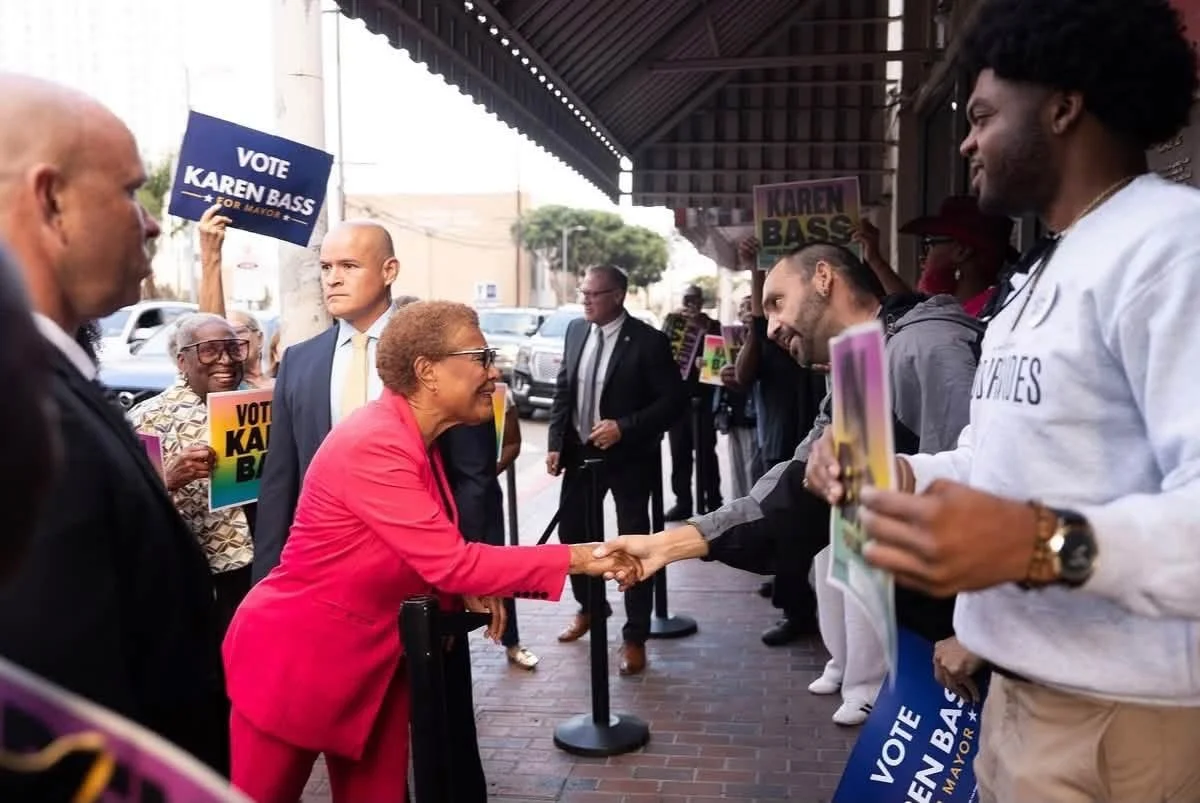
Mayor Karen Bass Greets Supporters at Pancakes and Politics Forum in Downtown Los Angeles
There is something powerful about being in a room where community members, elected leaders, advocates, and residents can come together to discuss one of the most serious challenges facing Los Angeles.
I recently had the opportunity to attend the Pancakes and Politics forum featuring Los Angeles Mayor Karen Bass at The Original Pantry Cafe in Downtown Los Angeles. Hosted by Hope the Mission and KTLA, the forum focused heavily on homelessness and gave those in attendance an opportunity to hear directly from the mayor about the city's response to the crisis. The event was part of a two-day series that also featured Los Angeles City Councilmember Nithya Raman and California gubernatorial candidate Steve Hilton.
Beyond the politics, one of the things that stood out to me was the atmosphere in the room. Mayor Bass was greeted with a great deal of enthusiasm and support from many of the community members in attendance. I enjoyed having the opportunity to hear her speak directly about the issues facing Los Angeles, while also fellowshipping with other attendees and, of course, enjoying some pancakes.
But the subject at the center of the conversation was anything but lighthearted.
When asked to grade her administration's performance on homelessness, she gave herself a B+ while emphasizing that she would not be satisfied while Angelenos continue sleeping on the streets. She also discussed the need to improve services for people placed in interim housing and ultimately help more people reach permanent housing and self-sufficiency.
The discussion also highlighted the complexity of the system itself. Bass described problems involving the delivery of services in interim housing and argued that community organizations have often been given significant responsibilities without sufficient resources. At the same time, the city's approach faces scrutiny over spending, outcomes, and whether people who enter temporary housing ultimately remain housed. These are important questions because addressing homelessness requires not only getting people off the streets, but creating pathways toward long-term stability.
For me, attending the forum reinforced why these conversations matter.
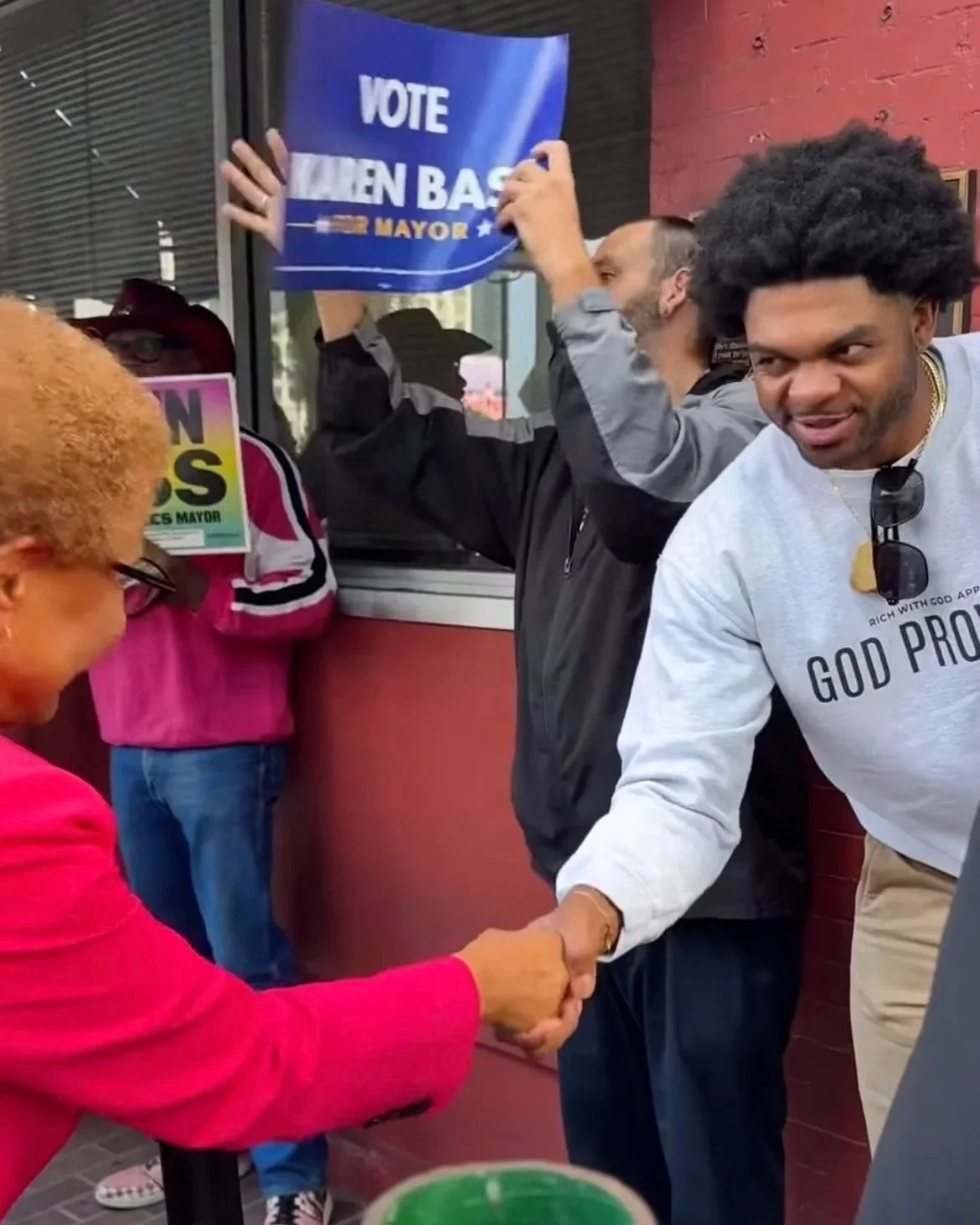
Mayor Karen Bass Greets Omar Cook at Pancakes and Politics Forum in Downtown Los Angeles
It is easy to discuss homelessness as a political talking point, but when you live in Los Angeles, you see the human impact. Skid Row remains one of the most visible examples, but homelessness affects communities throughout the city. There is no single policy or program that will solve a crisis this complicated overnight.
I appreciated hearing Mayor Bass discuss the issue directly and explain the work her administration is pursuing. I also believe Los Angeles needs leaders who understand that addressing homelessness requires sustained attention, accountability, compassion, resources, and a willingness to explore different solutions when existing approaches are not producing the results residents need.
Supporting a leader should never mean ignoring the work that remains. Homelessness is still an emergency in Los Angeles, and elected officials should continue to be held accountable for measurable progress, responsible use of public resources, and the treatment of people experiencing homelessness with dignity.
That is also why community engagement matters.
Events like Pancakes and Politics create opportunities for residents to move beyond headlines and hear directly from the people making decisions that affect their city. They allow community members to listen, ask questions, connect with one another, and develop a better understanding of the challenges government is attempting to address.
I left the forum glad that I attended. I enjoyed the fellowship, the conversations, the pancakes, and the opportunity to hear Mayor Bass discuss an issue that will continue to shape the future of Los Angeles.
The homelessness crisis will not disappear overnight. Progress will require cooperation between city, county, state, and federal governments, service providers, community organizations, businesses, advocates, and residents. It will also require continued public engagement and honest conversations about what is working, what is not, and what needs to change.
Ultimately, that may be one of the most important lessons from gatherings like this: solving our city's biggest challenges requires more than government alone. It requires a community willing to show up, stay informed, demand accountability, and remain engaged in building a better Los Angeles.