
Mayor Karen Bass and Black Community Leaders Call for Apology From Nithya Raman Over Daryl Gates Remarks
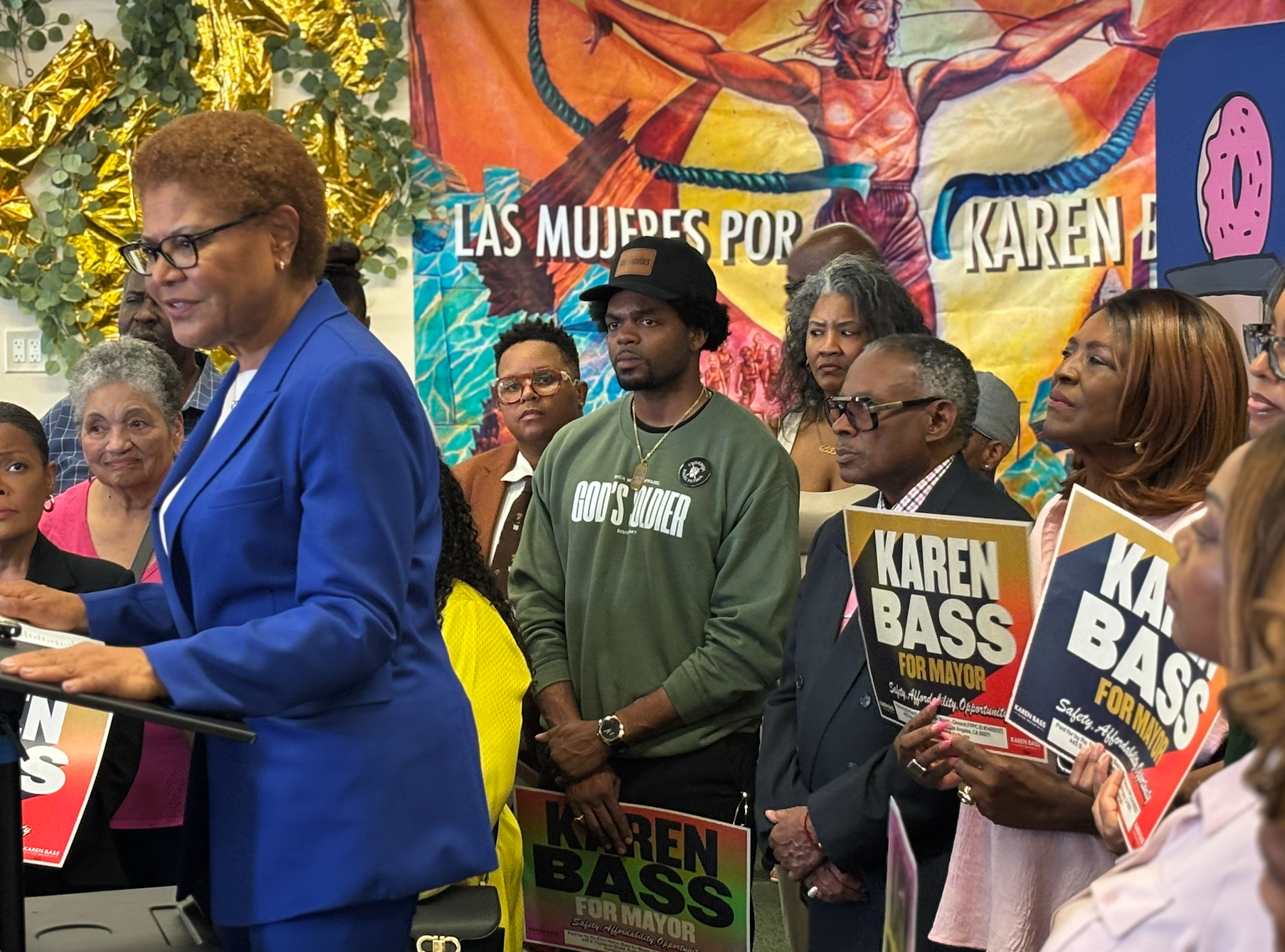
October 15, 2026 - Mayor Karen Bass Addresses Media Calling for an Apology From Nithya Raman Over Daryl Gates Remarks
Photo Credit: Omar Cook/The Cook Connection
On Thursday, October 15, I stood alongside Los Angeles Mayor Karen Bass and Black community leaders during a press conference calling on mayoral challenger Nithya Raman to apologize for remarks she made referencing former Los Angeles Police Department Chief Daryl Gates during a televised mayoral debate.
The gathering was more than a political press conference. For those in attendance, it was a moment of reflection on Los Angeles history, the experiences of Black residents under past policing practices, and the importance of understanding that history when discussing the city's future.
Among those who spoke were Mayor Bass, actress and activist Anne-Marie Johnson, community leader Danny Bakewell, and civil rights attorney Carl Douglas. Each brought a perspective to a controversy that has reignited conversations about policing, racial justice, and historical accountability in Los Angeles.
Standing in that room, I witnessed a powerful demonstration of unity among community members and leaders who believed Raman's remarks required a public response.
The Remarks That Sparked the Controversy
The controversy began during a televised debate between Mayor Bass and Councilmember Raman, where the candidates discussed homelessness, public safety, immigration enforcement, and the Los Angeles Police Department.
During an exchange about the LAPD's relationship with federal immigration authorities, Raman referenced an earlier period when Los Angeles was considered a standard for limiting local police involvement in federal immigration enforcement.
She referred to the city as having been the "gold standard" for noncooperation with immigration enforcement during the era of former LAPD Chief Daryl Gates.
The reference immediately became a point of controversy because of Gates' complicated and painful legacy, particularly among Black and Latino Angelenos who experienced aggressive policing during his tenure.
Raman has since clarified that she was referring specifically to Special Order 40, a policy established in 1979 that restricted LAPD officers from stopping individuals solely to determine their immigration status. She has also described Gates as a racist police chief and accused Bass of misrepresenting her original remarks.
Bass and the community leaders gathered Thursday maintained that invoking the Gates era in such positive terms, even in reference to an immigration policy, demonstrated a troubling lack of sensitivity to the experiences of communities affected by his leadership.
Mayor Bass and Community Leaders Demand Accountability
During the press conference, Mayor Bass spoke about the impact of Gates' leadership on African American communities and questioned Raman's familiarity with that period of Los Angeles history.
“Daryl Gates inflicted serious harm to African Americans. I realized at that moment that my opponent is not really familiar with that. I know that she has only lived in Los Angeles for 13 years, and almost seven of these years she served on the City Council, and now she wants to be in charge of the entire city that she barely knows,” Bass said.
The mayor called on Raman to retract her statement and apologize.
For Bass, the issue was personal. She has spoken about experiencing police surveillance and harassment during her years as a community organizer, including her involvement in litigation challenging LAPD surveillance practices.
Civil rights attorney Carl Douglas also addressed the importance of understanding the history of policing in Los Angeles. His participation brought the perspective of someone whose legal career has involved representing families affected by police violence and advocating for accountability within law enforcement.
Actress and activist Anne-Marie Johnson and community leader Danny Bakewell joined the calls for accountability, adding their voices to a gathering centered on the historical experiences of Black Angelenos.
What stood out to me was the seriousness with which those in the room approached the subject. This was not simply a disagreement over campaign messaging. It was a conversation about historical memory, the experiences of communities that endured discrimination, and the responsibility public officials have when discussing that history.
Understanding the Legacy of Daryl Gates
To understand why the remarks generated such a strong response, it is important to revisit the history of the Los Angeles Police Department under Daryl Gates.
Gates served as LAPD chief from 1978 until 1992, a period marked by major developments in policing, intense community tensions, and widespread allegations of excessive force and racial discrimination.
During his tenure, the department's Community Resources Against Street Hoodlums unit, commonly known as CRASH, became associated with aggressive anti-gang enforcement. Critics accused officers of racial profiling, unjustified arrests, and mistreatment of Black and Latino residents.
One of the most defining events of Gates' leadership occurred on March 3, 1991, when LAPD officers brutally beat Rodney King during an arrest. The incident was captured on video and generated national outrage.
The beating prompted the creation of the Christopher Commission, an independent panel tasked with examining excessive force and misconduct within the LAPD.
The commission's 1991 report identified serious problems involving excessive force, racism, supervision, and accountability within the department. It recommended significant reforms to police oversight and management.
In April 1992, the acquittal of four officers charged in connection with King's beating sparked days of civil unrest across Los Angeles. The unrest exposed longstanding frustrations surrounding policing, inequality, and relations between law enforcement and communities of color.
Gates retired later that year.
His legacy also includes Special Order 40, the immigration-related policy Raman was referencing during the debate. That policy is an important part of Los Angeles' immigration enforcement history, but its existence does not erase the documented problems associated with other policing practices during Gates' administration.
Both parts of that history deserve to be understood accurately.
Why Understanding History Matters in Leadership
As I stood with community leaders during the press conference, I reflected on the importance of understanding the history of the communities we seek to serve.
Los Angeles has experienced periods of tremendous racial tension, gang violence, discrimination, and conflict between residents and law enforcement. Those experiences have shaped generations of Angelenos and continue to influence public conversations about policing and accountability.
For people who lived through those years, references to the Gates administration are not merely historical observations. They can bring back memories of fear, mistreatment, and struggles for justice.
At the same time, the disagreement between Bass and Raman demonstrates why context matters in political conversations. Raman says she was praising a particular immigration policy, not Gates' overall leadership. Bass and those gathered Thursday argued that the wording nevertheless failed to recognize the harm associated with his tenure.
Understanding both the intended reference and the historical response is essential to evaluating the controversy.
I believe public officials have a responsibility to educate themselves about the communities they represent, listen to people whose experiences differ from their own, and recognize how historical events continue to affect the present.
Leadership requires more than discussing solutions for tomorrow. It also requires understanding the experiences that brought communities to where they are today.
A Powerful Moment of Community Unity
One of the most memorable aspects of the press conference was seeing people from different professional backgrounds come together around a shared concern.
Elected leadership, civil rights advocacy, entertainment, community organizing, and grassroots activism were represented in the room.
I appreciated the opportunity to stand alongside individuals who have spent years advocating for their communities and to hear their perspectives firsthand.
For me, the experience reinforced the importance of remaining involved in civic affairs and showing up when issues affecting our communities are being discussed.
Whether someone agrees with Mayor Bass, Councilmember Raman, or neither candidate, understanding the history behind this controversy is important.
Los Angeles residents deserve informed conversations about policing, immigration enforcement, racial justice, and the accountability of their elected officials.
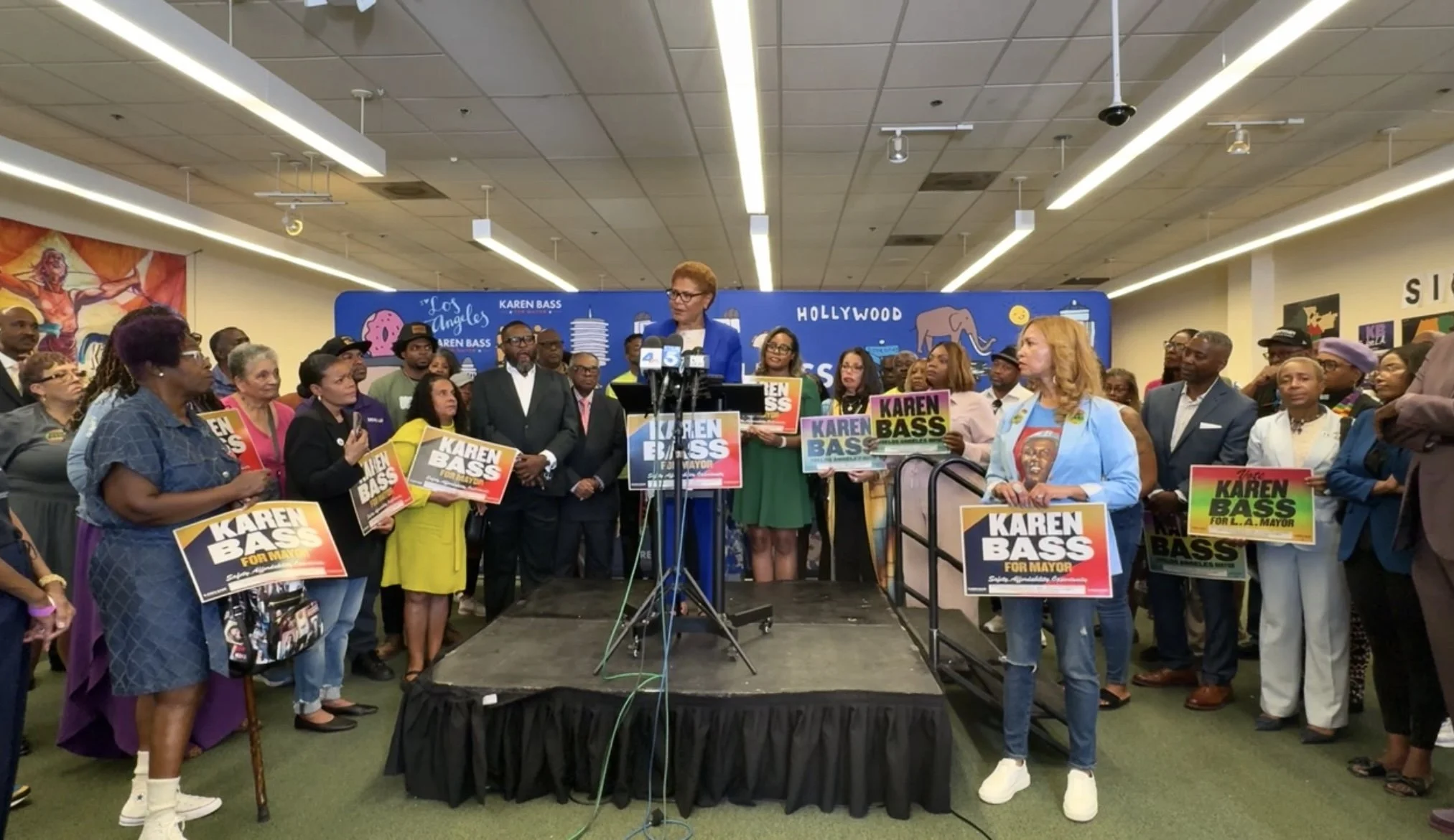
October 15, 2026 - Mayor Karen Bass Addresses Media Calling for an Apology From Nithya Raman Over Daryl Gates Remarks
Photo Credit: Omar Cook/The Cook Connection
Moving Forward With Historical Awareness
With the November mayoral election approaching, the controversy surrounding Raman's remarks has added another dimension to an already consequential political contest.
The disagreement raises questions that extend beyond either candidate. How should political leaders discuss complicated historical figures? How can cities acknowledge policies that had beneficial effects while also confronting the harm associated with the administrations that implemented them? And how can communities ensure that painful chapters of their history are neither forgotten nor misrepresented?
These are conversations worth having.
Attending Thursday's press conference reminded me that history is not simply something we read about in books. Its consequences remain present in our neighborhoods, institutions, and relationships.
The experiences of previous generations should inform how we discuss public policy, evaluate leadership, and pursue accountability today.
Los Angeles cannot fully understand its future without understanding its past.